Right view, right thought, right speech, right action, right livelihood, right effort, right mindfulness, right concentration.”
https://www.learnreligions.com/the-buddhas-first-sermon-449788

Right view, right thought, right speech, right action, right livelihood, right effort, right mindfulness, right concentration.”
https://www.learnreligions.com/the-buddhas-first-sermon-449788
Lead singer Damian Kulash makes spreadsheets cool again, as he explains the math and basic physics required to create the music video.
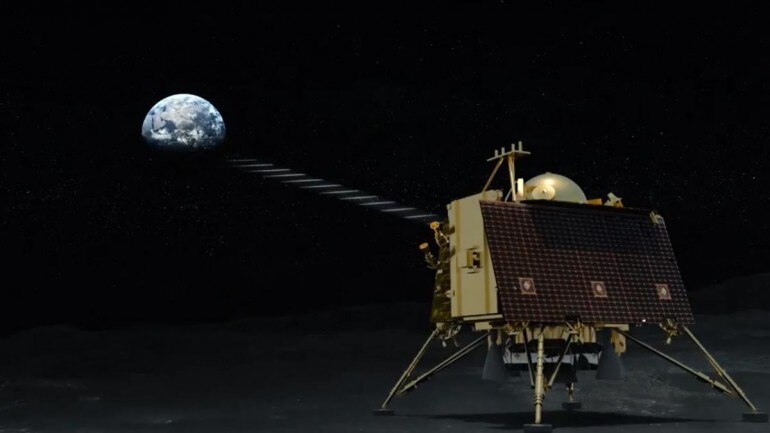
India’s second mission to Moon, Chandrayaan-2, is set to be launched on July 15 from from Satish Dhawan Space Centre at Sriharikota, Andhra Pradesh on-board GSLV Mk-III. Chandrayaan-2 is an advanced version of the previous Chandrayaan-1 mission, which was launched about 10 years ago.
The space mission is a result of some of India’s most advanced engineering marvels. The module for Chandrayaan-2 uses technology and software developed across the country, including Indian Space Research Organisation’s most powerful launch vehicle to date and a wholly indigenous rover.
What makes Chandrayan-2 special?
Chandrayaan-2 mission will help India and the world gain a better understanding of the origin and evolution of the Moon by conducting detailed topographical studies, comprehensive mineralogical analyses, and a host of other experiments on the lunar surface. While there, we will also explore discoveries made by Chandrayaan-1, such as the presence of water molecules on the Moon and new rock types with unique chemical composition.
The mission not only aims to expand India’s footprint in space, but also to inspire a future generation of scientists, engineers and explorers.
Students of a junior college in Udalguri, Assam were taught how to sow crops as part of their practical class.
The higher secondary first and second year students of Aspire Junior College, Udalguri participated in sowing of crops as part of their practical class curriculum on July 7 at Sapkhaiti of Udalguri district.
The authorities of the junior college said that they introduced the practical class to make the students more skilful and expose them to the traditional life of a farmer.
“It’s a part of the students’ practical class. The college has made it a part of the curriculum to make students understand and connect to rural lives and to understand the efforts of farmers,” principal Maihursa Boro told The News Mill.

The junior college took their students to a nearby paddy field in Sapekhaiti village near Udalguri town for practical experience on farming. The students of the college – both boys and girls – donned in school uniforms delightfully participated in sowing paddy crops. Photographs of the students participating in sowing crops has gone viral in social media, winning many hearts.
“We are trying to do our best for all round development of our students and aimed at exposing students to experience the traditional rural and clumsy life of a farmer,” said Jayanta K Nath, director, admission & marketing at Aspire Group of Institutes.

The arts are a natural part of STEAM work. Products and structures are built according to creative designs. Scientific developments are explained through well-crafted communications.
Educators can design more wholistic STEM programs by integrating the arts.

“Integrating arts activities can decidedly enliven the curriculum content, make lesson outcomes more successful and interesting to both teachers and students, and introduce powerful and inspired creative thinking into the teaching-learning process.”
– Sousa and Pilecki, From STEM to STEAM: Using Brain-Compatible Strategies to Integrate the Arts, 2013
Who participate in STEAM learning:
Today, on World Population Day, we look at the patterns of human settlements with NASA’s newly released night views of our planet from space. As you can see in the image, India’s borders are clearly defined with dense settlements within its boundaries.
Established by the Governing Council of the United Nations Development Programme in 1989, World Population Day seeks to raise awareness on population-related issues through the world. India currently ranks 2nd (1.3 billion) after China as the most populous country, contributing to over 17% of the growing planet population of 7.6 Billion.


For many online video stars, YouTube is top of mind when it comes to the best place to post a video. Facebook is trying to change that.

Facebook is sweetening its offerings for video creators, whether they’re viral video stars or media companies, luring them to its platform with new tools to help them make money through advertising and direct payments from Facebook users.
The new or updated offerings are similar to some already offered on YouTube and start-ups such as Patreon. The changes were announced at its “Facebook Creator Day” in Malibu, California, on Tuesday, held ahead of VidCon, a conference for the online video industry that starts Wednesday in Anaheim.
Facebook Watch, the platform’s video offering that includes original programming and uploaded video from creators, launched globally last year after being introduced in 2017. In June, Facebook said it had reached more than 720 million users monthly and 140 million users daily who spend at least one minute on Watch. In comparison, Google-owned YouTube says more than 1.9 billion logged-in users watch video on the platform every month.
Chandrayaan-2 module integrated with rocket, ready for July 15 launch.

More @

 Welcome to My Gallery - Soorya.