
https://in.reuters.com/news/picture/the-surreal-northern-lights-idINRTS315JM
Month: February 2020
How Netflix uses Python: Streaming giant reveals .
Here’s how Netflix uses Python.

Operations
Neftlix’s demand engineering team build resiliency into the network by providing regional failovers and orchestrating the distribution of Netflix’s traffic.
“We are proud to say that our team’s tools are built primarily in Python,” the team writes.
“The ability to drop into a bpython shell and improvise has saved the day more than once.”
Tools used by the team include:
- NumPy and SciPy to perform numerical analysis
- Boto3 to make changes to AWS infrastructure
- rq to run asynchronous workloads
- Flask APIs are used as a wrapper around the orchestration tools above.
- Jupyter Notebooks and nteract are used to analyze operational data and prototype visualization tools. Neflix uses Python to build custom extensions to the Jupyter server that allows engineers to manage tasks like logging, archiving, publishing and cloning notebooks.
Meanwhile, the big data orchestration team provide services and tooling for scheduling and executing ETL (Extract, Transform, Load) of data and adhoc data pipelines.
The team use Jupyter Notebooks with papermill to allow the scheduler to provide templatized job types, for example Spark.
Also used is pygenie, a Netflix-built client that interfaces with Genie, a federated job execution service.
Statistical analysis
Netflix’s CORE team uses many Python statistical and mathematical libraries, also including NumPy, SciPy, ruptures, and Pandas, which help analyse thousands of signals after an alert.
Python has also been used to develop a time series correlation system, as well as a distributed worker system to parallelize large analytic workloads.
On top of that, Python is also typically used for automation tasks, data exploration and cleaning, and visualization.
How Netflix uses Python: Streaming giant reveals its programming language libraries and frameworks
G Suite vs. Office 365
G Suite and Office 365 are the leading contenders in the arena of online productivity suites. This calculator tool and pricing breakdown will help you determine how the various plans measure up in cost.
Cost comparison calculator: G Suite vs. Office 365


Programming language popularity: Python tightens its grip at the top

Python sits firmly in top place in the newest annual ranking of popular programming languages by IEEE Spectrum.
DEVELOPER
- Web developers: These are the countries where you’ll get paid the most
- Developer jobs: From SQL to Java, these are the skills companies are looking for now
- Up to half of developers work remotely; here’s who’s hiring them
- Training algorithms to recognize deep fakes (ZDNet YouTube)
- The Best Web Hosting Providers (CNET)
- How to get a developer job (TechRepublic)
The ranking and others like it are meant to help developers understand the popularity of languages in a world where no one really knows what programmers are using on their laptops.
IEEE Spectrum has placed Python in first spot since 2017, and last year it was just ahead of C++. The top language is given a score of 100, and all languages with lower scores are scaled in relation to it. C++ last year scored 99.7, followed by Java at 97.5, and C with 96.7.
Qoutes 2020

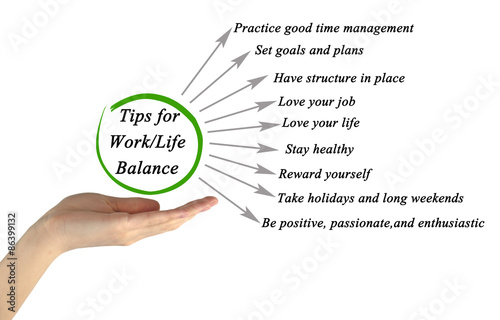
The Art of Balancing
The Art of Balancing
We all love to master the art of balancing one of these;
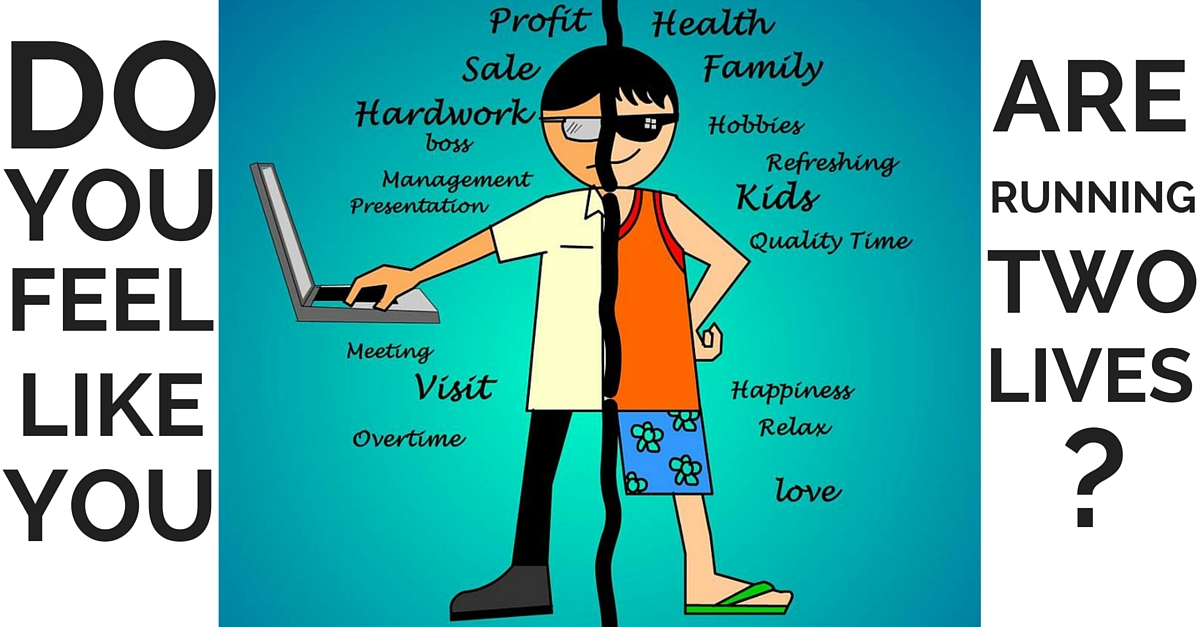
- working women between family and work.
- successful men between passion and profession.
- Gen Zs between mobile and real world.
- kids between academics and extra curriculars.
- Newborns between mom and mobile.
- Married men between wife and mother and so on.

Frozen beauty
Abraham Lake is an artificial lake and Alberta’s largest reservoir. Even though it’s man-made, it takes on the blue color of other glacial lakes in the Rocky Mountains. In winter, the lake draws nature photographers interested not just in the wildlife and spectacular landscape, but also the lake’s odd appearance when it freezes over. Bacteria on the lake bottom feed on dead organic matter and release the methane bubbles you see here. When the surface water freezes, the bubbles get trapped, creating a photographer’s dream.
https://contributors.robertharding.com/
Technology that changed us: From 1970s to 2020!
- The 1970s, from Pong to Apollo https://www.zdnet.com/article/technology-that-changed-us-the-1970s/
- The 1980s, from MS-DOS to the first GPS satellite https://www.zdnet.com/article/technology-that-changed-us-the-1980s/
- The 1990s, from WorldWideWeb to Google https://www.zdnet.com/article/technology-that-changed-us-the-1990s/
- The 2000s, from iPhone to Twitter https://www.zdnet.com/article/technology-that-changed-us-the-2000s/
- he 2010s, from Amazon Echo to Pokémon Go https://www.zdnet.com/article/technology-that-changed-us-the-2010s/

2003: ANDROID FOUNDED
Most people think of the Android operating system as something Google developed, but that’s not the whole story. Android was founded as a company, initially intended to build a operating system for digital cameras. At one point, the company was so close to closing down, it couldn’t pay its rent.
2004: FACEBOOK FOUNDED
In addition to Facebook, the company Mark Zuckerberg founded in 2004 as TheFacebook owns Instagram, WhatsApp, and Facebook Messenger. Together this juggernaut dominates messaging and social media to a degree never before seen.
2005: YOUTUBE
In 2005, it was very difficult and expensive to distribute video. I did some videos for clients and the challenges and costs were enormous. All that changed when YouTube made internet video free for everyone.
2006: TWITTER
What can you say about Twitter in 140 characters? #TurnsOut #YouCanSayALot.
Although Twitter upped its character count to 280 last year, the micro-blogging service created a new way to reach a tremendous number of people, instantly. Perhaps nothing showcases Twitter’s power more than Donald Trump’s unexpected and improbable rise to President of the United States. By using Twitter, #TheDonald bypassed all the gatekeepers and built his own audience of dedicated fans.
2007: IPHONE
The iPhone. It was rumored and anticipated for years, but when Steve Jobs finally held it up to show it, it still exceeded everyone’s expectations. The thing was, it wasn’t just the iPhonethat blew the PC, music, landline, and cell phone markets apart. It was the apps, which took another year.
2010: IPAD
The idea of a handheld, gesture-based tablet computer had been around for years. I bought a Tablet PC way back in 2002. It was unreliable, bulky, and very expensive. It wasn’t until Apple, a company normally associated with high-ticket items, introduced the iPad that the consumer tablet market took off.
2012: RASPBERRY PI
Ever since humanity discovered how to make tools, there have been makers. But the ability to add advanced computing power to projects was limited by the cost of entry. TheRaspberry Pi changed all that. Here was a $25 device that could run Linux and be at the heart of a vast array of projects.
2013: PLAYSTATION 4 AND XBOX ONE
It’s hard to believe it’s been five years since the latest console generation was introduced. That said, games for the Xbox One and the PS4 have eclipsed those of previous generations, providing what has become almost a new golden age of video games.
2014: SATYA NADELLA AND WINDOWS 10
By late 2013, Microsoft was rapidly becoming a has-been in the minds of many users and analysts. Windows 8 was a total failure. Microsoft was late to the smartphone party and Windows Phone was a dismal failure. The acquisition of Nokia was insanely expensive and ultimately fruitless. Microsoft had lost all its luster.
2015: AMAZON ECHO AND THE ALEXA ECOSYSTEM
When I first looked at the Echo, it seemed kind of useless, but interesting. Since then, I’ve incorporated six Alexa devices into my life.
It’s important to understand that Alexa is what Siri should have been. Alexa is smart, fast, personable — and has a huge library of apps, called Skills. Amazon has been smart, allowing other vendors to license and embed the Alexa technology in their products.
As a result, the voice-based personal assistant, which is also the core of a home-based IoT hub, is now a practical aspect of everyday life.
2016: POKÉMON GO
So, that happened. You may have heard Microsoft talking about the HoloLens. You may have seen Apple’s keynote, where they talked about the potential for AR (augmented reality). But for millions of people, AR is already here… in the form of a ridiculous computer game/experience.
2018: APPLE WATCH SERIES 4
When Apple announced the Apple Watch Series 4, it not only created a compelling reason to buy into the Apple Watch ecosystem, it created a compelling reason to buy a watch, period. What sets the Series 4 watch apart from its predecessors — and what makes it the technology that changed us for 2018 — are the Series 4 health features.
THE FIRST SMS TEXT MESSAGE
Who would have thought that people would prefer typing over talking on their phones? While the SMS concept had existed for quite some time, it wasn’t until December 3, 1992 that engineer Neil Papworth sent a message to Richard Jarvis’ Vodafone Orbitel 901 handset. The message that precipitated billions of very sore thumbs was a simple “MERRY CHRISTMAS”.

https://www.statista.com/chart/12109/sms-volume-in-the-united-states/
At the top of its usage curve, US cell phone customers sent 2.3 trillion SMS messages. But asthis chart from Statistica shows, SMS volume has been going down steadily as users migrate to app-based message from Apple, WhatsApp, and Facebook. Even so, SMS changed how we talk, or rather, not talk to each other.
https://www.zdnet.com/article/technology-that-changed-us-the-1990s/
 Welcome to My Gallery - Soorya.