Aurora borealis or Northern Lights and Aurora australis or Southern Lights
An aurora (plural: auroras or aurorae), sometimes referred to as polar lights, northern lights (aurora borealis), or southern lights (aurora australis), is a natural light display in the Earth’s sky, predominantly seen in the high-latitude regions (around the Arctic and Antarctic).
While Earth is only the fifth largest planet in the solar system, it is the only world in our solar system with liquid water on the surface. Just slightly larger than nearby Venus, Earth is the biggest of the four planets closest to the Sun, all of which are made of rock and metal.
The name Earth is at least 1,000 years old. All of the planets, except for Earth, were named after Greek and Roman gods and goddesses. However, the name Earth is a Germanic word, which simply means “the ground.”
WE’RE ON IT
Earth is a rocky planet with a solid and dynamic surface of mountains, canyons, plains and more. Most of our planet is covered in water.
Kid-Friendly Earth
Our home planet Earth is a rocky, terrestrial planet. It has a solid and active surface with mountains, valleys, canyons, plains and so much more. Earth is special because it is an ocean planet. Water covers 70 percent of Earth’s surface.
Earth’s atmosphere is made mostly of nitrogen and has plenty of oxygen for us to breathe. The atmosphere also protects us from incoming meteoroids, most of which break up before they can hit the surface.
Atmosphere
Near the surface, Earth has an atmosphere that consists of 78 percent nitrogen, 21 percent oxygen, and 1 percent other gases such as argon, carbon dioxide and neon. The atmosphere affects Earth’s long-term climate and short-term local weather and shields us from much of the harmful radiation coming from the Sun. It also protects us from meteoroids, most of which burn up in the atmosphere, seen as meteors in the night sky, before they can strike the surface as meteorites.
Moons
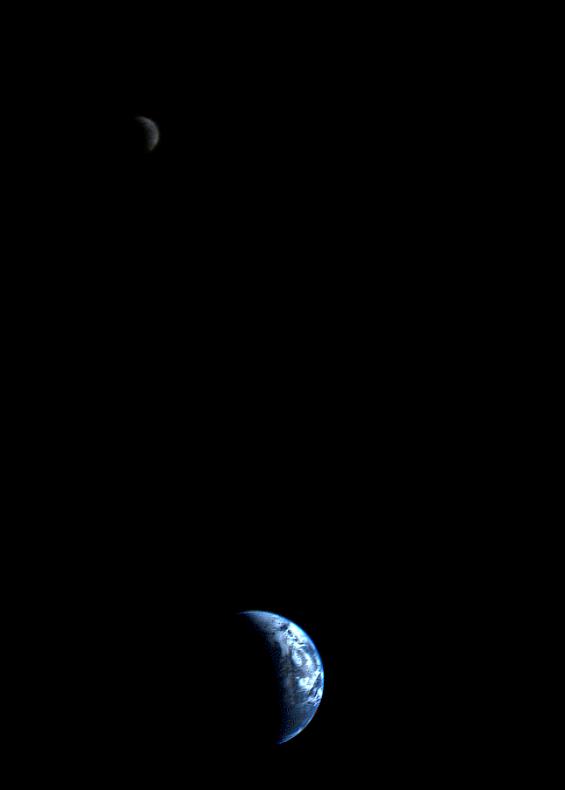
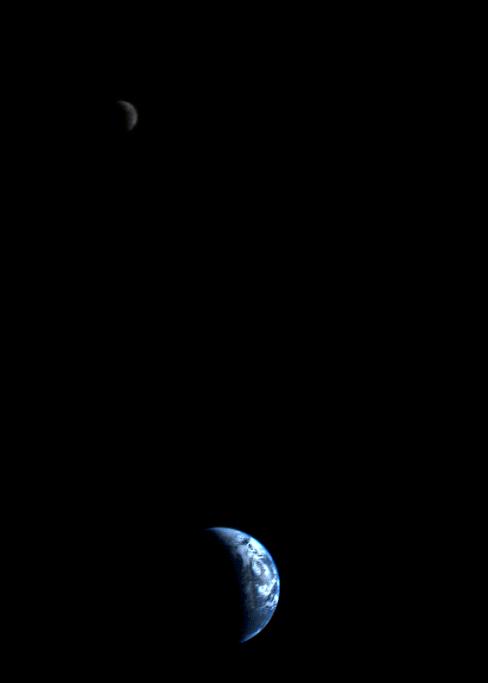
Earth is the only planet that has a single moon. Our Moon is the brightest and most familiar object in the night sky. In many ways, the Moon is responsible for making Earth such a great home. It stabilizes our planet’s wobble, which has made the climate less variable over thousands of years.
Earth sometimes temporarily hosts orbiting asteroids or large rocks. They are typically trapped by Earth’s gravity for a a few months or years before returning to an orbit around the Sun. Some asteroids will be in a long “dance” with Earth as both orbit the Sun.
Some moons are bits of rock that were captured by a planet’s gravity, but our Moon is likely the result of a collision billions of years ago. When Earth was a young planet, a large chunk of rock smashed into it, displacing a portion of Earth’s interior. The resulting chunks clumped together and formed our Moon. With a radius of 1,080 miles (1,738 kilometers), the Moon is the fifth largest moon in our solar system (after Ganymede, Titan, Callisto and Io).
The Moon is farther away from Earth than most people realize. The Moon is an average of 238,855 miles (384,400 kilometers) away. That means 30 Earth-sized planets could fit in between Earth and the Moon.
Potential for Life
Earth has a very hospitable temperature and mix of chemicals that have made life possible here. Most notably, Earth is unique in that most of our planet is covered in water, since the temperature allows liquid water to exist for extended periods of time. Earth’s vast oceans provided a convenient place for life to begin about 3.8 billion years ago.
Some of the features of our planet that make it great for sustaining life are changing due to the ongoing effects of climate change. To find out more visit our sister website, climate.nasa.gov.
HOME, SWEET HOME
Earth is the perfect place for life as we know it.
PROTECTIVE SHIELD
Our atmosphere protects us from incoming meteoroids, most of which break up in our atmosphere before they can strike the surface.
Our solar system consists of our star, the Sun, and everything bound to it by gravity — the planets Mercury, Venus, Earth, Mars, Jupiter, Saturn, Uranus and Neptune, dwarf planets such as Pluto, dozens of moons and millions of asteroids, comets and meteoroids. Beyond our own solar system, we have discovered thousands of planetary systems orbiting other stars in the Milky Way.
ONE OF BILLIONS
Our solar system is made up of a star, eight planets and countless smaller bodies such as dwarf planets, asteroids and comets.
MEET ME IN THE ORION ARM
Our solar system orbits the center of the Milky Way Galaxy at about 515,000 mph (828,000 kph). We’re in one of the galaxy’s four spiral arms.
GOOD ATMOSPHERE(S)
Our solar system is a region of space. It has no atmosphere. But it contains many worlds—including Earth—with many kinds of atmospheres.
MANY MOONS
The planets of our solar system—and even some asteroids—hold more than 150 moons in their orbits.
ING WORLDS
The four giant planets—and at least one asteroid—have rings. None are as spectacular as Saturn’s gorgeous rings.
LEAVING THE CRADLE
More than 300 robotic spacecraft have explored destinations beyond Earth orbit, including 24 astronauts who orbited the moon.
LIFE AS WE KNOW IT
Our solar system is the only one known to support life. So far, we only know of life on Earth, but we’re looking for more everywhere we can.
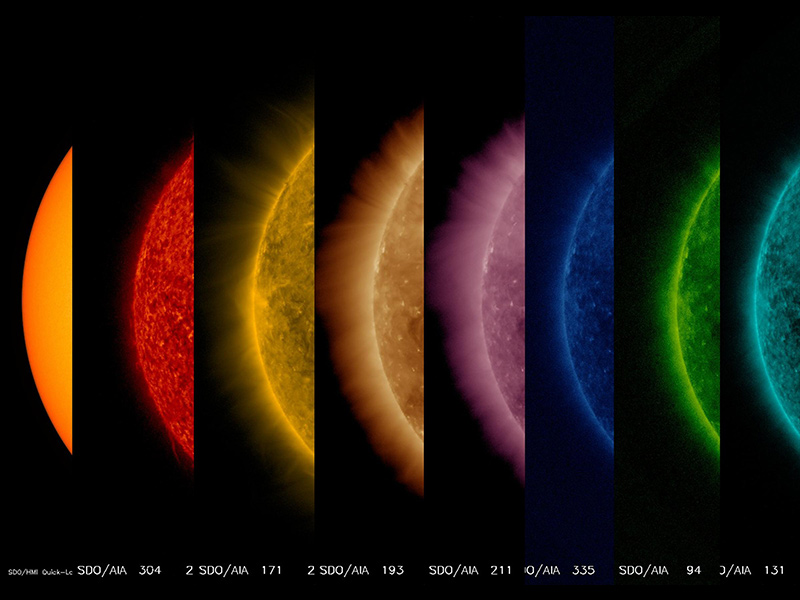
This sequence of images shows the sun from its surface to its upper atmosphere all taken at about the same time (Oct. 27, 2017). Image credit: NASA/GSFC/Solar Dynamics Observatory
The Sun—the heart of our solar system—is a yellow dwarf star, a hot ball of glowing gases.
Its gravity holds the solar system together, keeping everything from the biggest planets to the smallest particles of debris in its orbit. Electric currents in the Sun generate a magnetic field that is carried out through the solar system by the solar wind—a stream of electrically charged gas blowing outward from the Sun in all directions.
The best time to post on LinkedIn: The perfect time to post on LinkedIn is between 10.00 a.m. and 12.00 p.m. The perfect day to post on LinkedIn is Wednesday. While Tuesday and Thursday even have notably higher engagement rates. The worst time to post on LinkedIn is during the weekends or after work hours.The best time to Post on Pinterest: The perfect times to post on Pinterest are 8 to 11 p.m. and, interestingly, 2 p.m. to 4:00 a.m. this might indicate some interest within the platform in non-North American time zones, which suggests global content is all the more important here.
Instagram is supposed to be used on mobile devices. Approximately 60% of its U.S. users use the app daily, though it might appear that many engage with content more during off-work hours than during the workday. ✪ The best time to post on Instagram: On average, the simplest times to post on Instagram across industries are 1 p.m, and 5 p.m., during lunch and therefore the end of the standard workday, respectively. B2B organizations have the foremost times of high-clickthrough rates to settle on from 12 to 1 p.m., 5:00 to 6:00 p.m., and whilst late as 8 to 9 p.m. when people are winding down for the day. The perfect day to post on Instagram is Friday.Twitter is certainly a dominant social media platform with approximately 330 million active users. Although, beyond just an excellent number of individuals on the platform, there also are about five-hundred billion tweets made per day. Thus, there’s certainly the chance to plug your brand or business through Twitter. However, without understanding your audience, your tweet could also just be another blink within the system. ✪ The best time to post on Twitter: The best time to post on Twitter is between 9 a.m and 1 p.m. While Monday through Friday from 8 a.m. to 4 p.m. generates consistent engagement. The best day to post on Twitter is both Tuesday and Wednesday. The poor time to post on Twitter is between 10 p.m and 4 a.m. The poor day to post on Twitter is both Saturday and Sunday. It’s estimated that LinkedIn currently has about 300 million active users. which might be but both Facebook and Twitter.The best time to post on Facebook: The best time to post on Facebook is between 11 a.m. and 4 p.m. The perfect day to post on Facebook is Wednesday. While Thursday, Friday, Saturday, and Sunday even have notably higher engagement rates. The worst time to post on Facebook is each within the early mornings hours, and also, within the evenings. for instance, before 7 a.m. and after 5 p.m. The poor day to post on Facebook is Tuesda
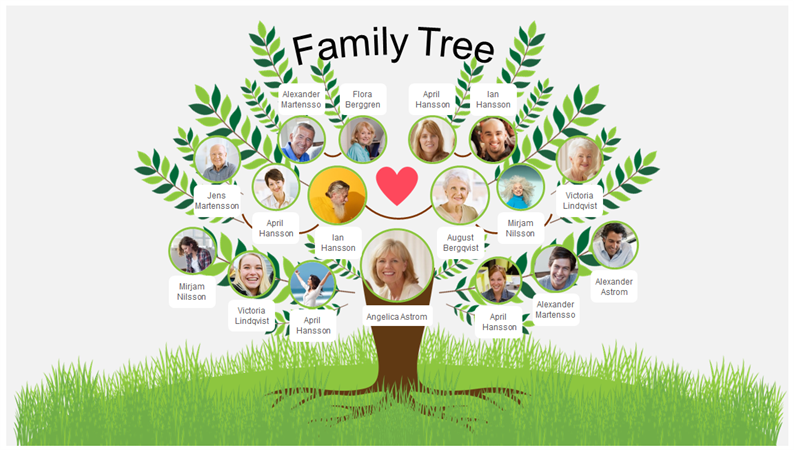
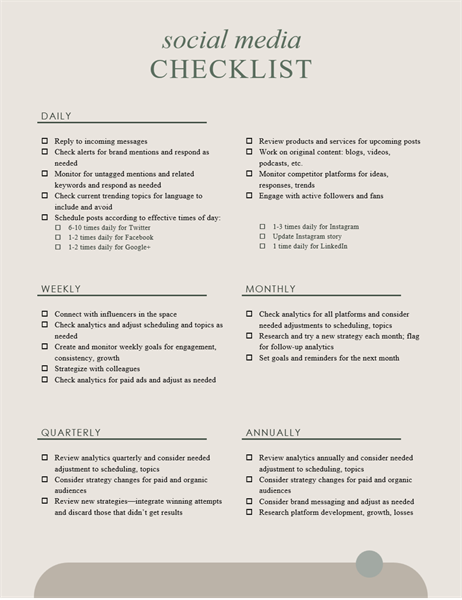
Recreate your family lineage with this literal family tree template. Perfect for family reunions, sharing with your siblings, or printing for your wall. This is an accessible template. PowerPoint https://templates.office.com/en-us/family-tree-tm55579078Growing your social media presence is key for creating new fans, friends, and clients. This list takes you step by step through creating an effective social media strategy with tips for each day, week, month, quarter, and year. Plan ahead, implement, and use analytics to ensure continual improvement. Word https://templates.office.com/en-us/social-media-checklist-tm33568166
On Charles Darwin’s birthday, we celebrate Darwin Day—and, of course, there’s no better place to do that than the Galápagos Islands. Darwin is best known for his theory of evolution by natural selection, which he published in his 1859 book ‘On the Origin of Species.’ During his travels to the Galápagos Islands years earlier, Darwin observed creatures that were similar from island to island but had slightly different adaptations to better survive in their specific environments. This became a key component of his research.
The islands are home to thousands of unique species, including this Pinzon Island tortoise, which we see hatching from an egg at the Charles Darwin Research Station. These tortoises were once at the brink of extinction in the wild due to several factors, including centuries of capture by humans and predation by invasive rats. But thanks to conservation efforts at the Charles Darwin Research Station on Santa Cruz Island in the Galápagos, they’re beginning to successfully hatch in the wild for the first time in more than 150 years.












 Welcome to My Gallery - Soorya.