

Setting the Stage for 2020
Sharing my themes for 2020:

- GOALS: Setting goals that are big enough to excite and scare me
- ACTION: Taking massive action towards achieving my goals
- EXPERIMENT: Create products for the data community (clothing, notebooks, calendars, etc.)Don’t be averse to trying new things
- COMMUNITY: Continue the Humans of Data Science and Datacated Weekly projects; work with Story by Data volunteers
- NETWORK: Attend conferences (data, AI, ML, industry, etc.); make personal connections on LinkedIn
- FAMILY: Spend quality time with family and friends; talking, dancing, laughing, and having fun
- MINIMALISM: Declutter physical and digital objects; less is more
- EDUCATION: Invest in learning new skills and staying current with market trends; never stop reading
- ADVENTURE: Journey to explore by running a marathon in each of the 50 states of America; We Run Marathons
What is your theme for the upcoming year?
Fun and Cute Video- Random 28-11-2019


Kollam Lighthouse diaries
It’s a great day


Funny Cat in Shoe!
1, 1, 2, 3: It’s Fibonacci Day!
Today’s date, November 23, can be represented as 11/23, or 1,1,2,3—a Fibonacci sequence of numbers. Likewise, as the leaves on the Queen Victoria agave in today’s image spiral out from the centre, they also express the Fibonacci sequence. This unique sequence of numbers was introduced to Europe in 1202 by the Italian mathematician Leonardo of Pisa (posthumously named Fibonacci) in his revolutionary work the ‘Liber Abaci.’ The book begins by describing the Hindu-Arabic numeral system or ‘Modus Indorum’—0 1 2 3 4 5 6 7 8 9—showing how their application could simplify trade and make calculations faster and easier (most of Europe at this time used Roman numerals).
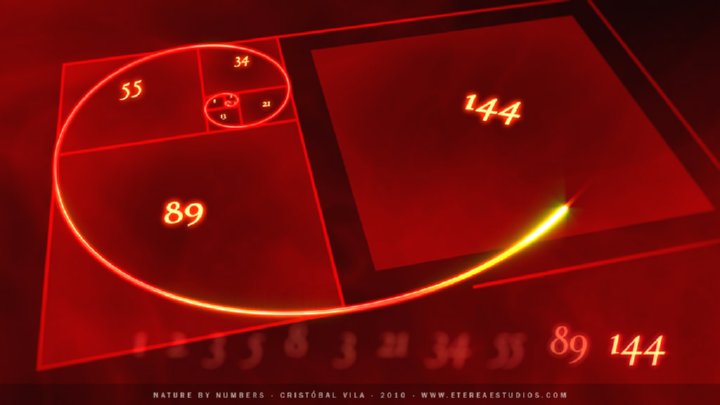
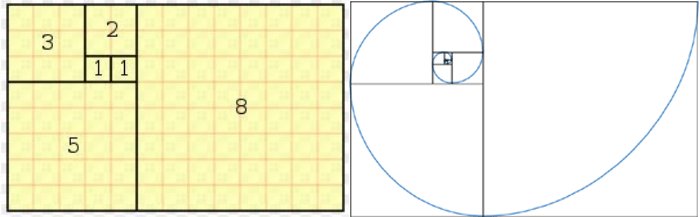
In the third section of his book, Fibonacci goes on to describe various mathematical problems including a thought experiment about increasing rabbit populations, which results in a Fibonacci sequence. The sequence is determined by adding the previous two numbers together to determine the next number: 1, 1, 2, 3, 5, 8, 13, 21, 34, etc. Since then, mathematicians, scientists, and artists have been studying and applying the Fibonacci sequence and the Fibonacci numbers that make it up. While Fibonacci gets the credit for this work, he wasn’t the first to discover it. Research published in 1985 posits that ancient Indian mathematicians had been aware of and written about the sequence for more than a century before Fibonacci’s work.

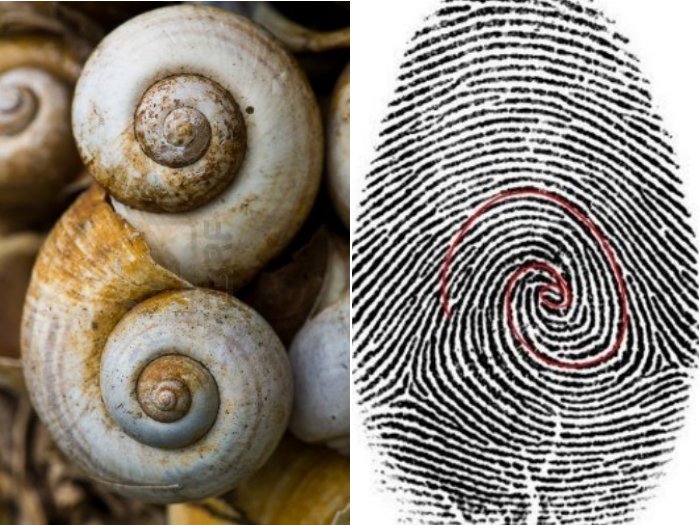
The fibonacci spiral appears not only in the perfect nautilus shell…
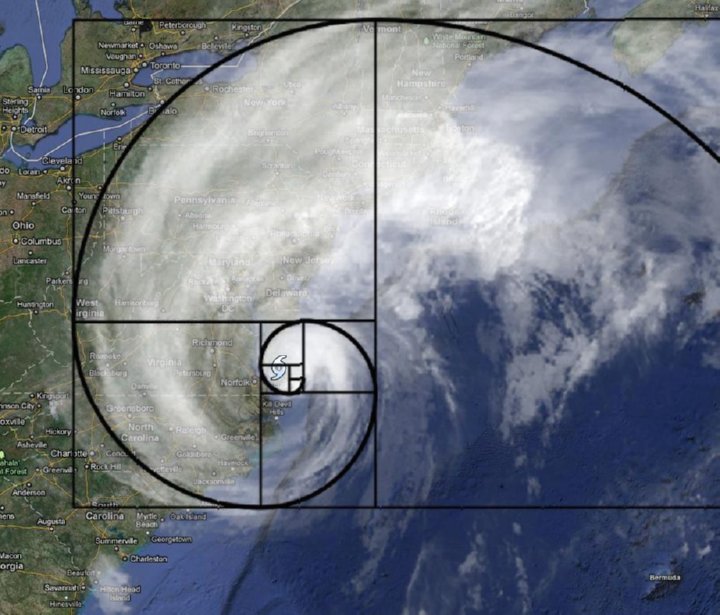
…but in events and objects viewed from afar.

An energy system in the shape of a fibonacci moves with limited losses. Hurricane Irene.
6 Ways to Get a Free Domain Name in Less Than a Minute
A domain name is a website address that includes a name, a dot (or period), and an extension like “com” or “net” like fitsmallbusiness.com. We reviewed several ways to get a free domain name, including sourcing one directly from a free domain name provider and securing one as part of a paid hosting package.
Free Domain Name Providers
| Free Domain Name Provider | Best for |
|---|---|
| Bluehost | Companies that need a free domain and affordable hosting for WordPress websites |
| Squarespace | Companies the need a free domain for an easy-to-design professional website |
| Dreamhost | Businesses that need a free domain with a simple drag-and-drop website builder |
| Weebly | Companies that need a completely free subdomain and low-tech website builder |
| dot.tk | Businesses looking for a short-term yet completely free domain |
| Biz.nf | Businesses that need unlimited renewals on a free domain |
Here are the six best ways to get a free—or almost free—domain name.


 Welcome to My Gallery - Soorya.